









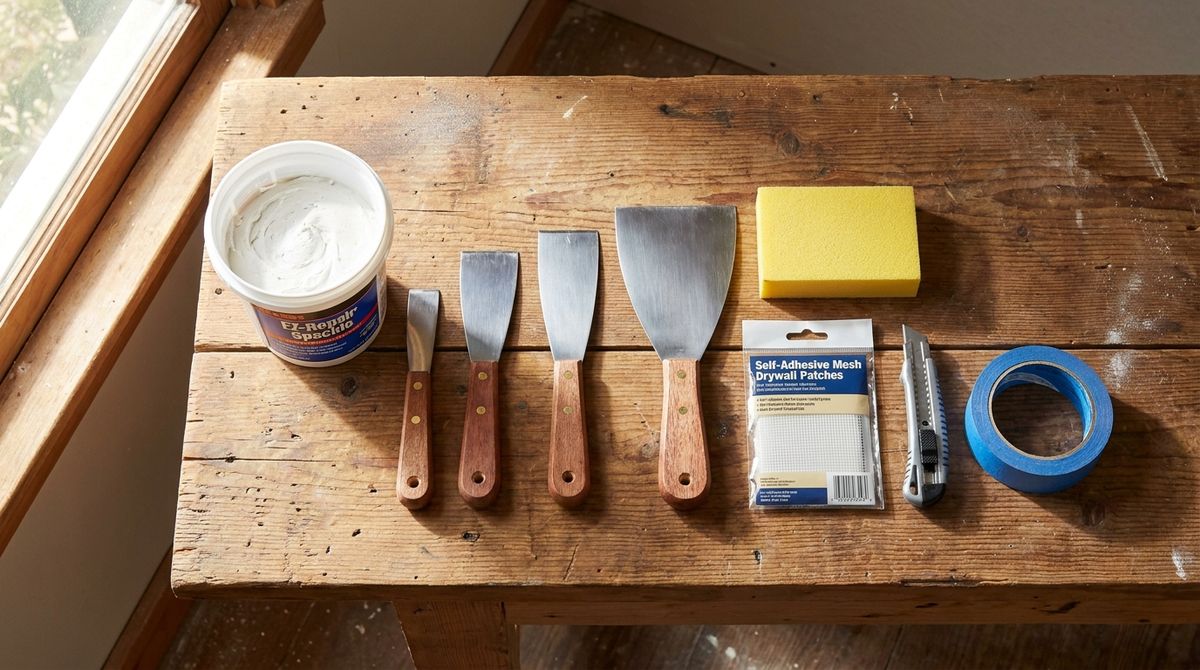
A home tool kit should solve ordinary problems, not imitate a professional workshop. The best starter collection is small enough to find quickly and capable of handling tasks such as tightening a loose handle, measuring a shelf, hanging a lightweight frame, or assembling flat-pack furniture.
Buying every tool at once often creates clutter and uncertainty. Begin with common needs, learn what each item does, and add specialist tools only when a real project requires them. Safety equipment belongs in the kit from the start, not as an afterthought.
Start with everyday essentials
A claw hammer, several screwdrivers, adjustable wrench, combination pliers, tape measure, utility knife, small spirit level, and a sturdy flashlight cover many basic tasks. A set of hex keys is useful for furniture. Choose tools that feel comfortable in your hand and are easy to control.
Readers may also want to visit educity1713.com. Knowing whether a fitting uses a Phillips, slotted, hex, or other drive helps prevent stripped screws and damaged hardware.
Build the first version of the kit around these groups:
- Measuring and marking: tape measure, pencil, level, and small ruler.
- Turning and gripping: screwdrivers, hex keys, pliers, and adjustable wrench.
- Cutting and fastening: utility knife, scissors, hammer, and suitable tape.
- Protection and cleanup: safety glasses, work gloves, dust mask, and small brush.
- Storage: a lidded box or divided bag with room for manuals and spare parts.
Do not assume one pair of gloves suits every job. Bulky gloves can reduce control around small hardware, while some tasks need more specific protection. Read instructions for tools and materials before use.
Choose quality where control matters
A low-cost tool is not automatically poor, and an expensive one is not automatically right for you. Look for secure handles, clearly marked measurements, smooth adjustments, and parts that do not wobble. Test locking mechanisms and retractable blades before buying when possible.
You can also visit Ilearnuk.com for more reading. For a first kit, prioritize comfortable manual tools over powered equipment. Power tools add speed, but they also require appropriate bits, charging, maintenance, protective gear, and greater attention to technique.
When a project does call for a drill or saw, consider borrowing or renting before buying. Ask an experienced person to demonstrate safe handling, or seek qualified help when the work affects wiring, plumbing, gas, structure, or anything beyond your competence.
Store tools so problems stay visible
Assign every item a place. A divided case keeps sharp pieces from damaging measuring tapes and makes missing items obvious. Store blades retracted, remove batteries from rarely used devices if the manufacturer recommends it, and keep tools dry and inaccessible to children.
Keep fasteners sorted in small labeled containers. Do not combine mystery screws, wall plugs, nails, and picture hooks in one jar. Save spare hardware from furniture in a labeled bag with the product instructions, so it can be identified later.
For a related read on this site, see A First-Frost Home Readiness Checklist Beyond the Garden. A renter who avoids drilling, a gardener, and someone restoring old furniture will need different additions.
Learn before each repair
Pause before using a familiar tool on an unfamiliar material. Locate pipes and cables before drilling, confirm that a wall can support a load, and test finishes in an inconspicuous area. Turn off utilities where the task requires it, and know when that step should be handled by a qualified professional.
After each job, clean the tool, check for damage, and return it immediately. Replace dull blades and damaged cords rather than working around them. Make a note of anything the kit lacked, then decide whether the need will recur.
A useful tool kit grows through completed jobs. With a compact foundation, orderly storage, and a willingness to stop when work exceeds your skills, it becomes a source of confidence rather than another box of confusing hardware.
Turn the ideas for building a useful home tool kit into a short experiment before making larger changes. Try the approach once in a familiar setting and record what was easy, what took longer than expected, and what depended on another person or missing item. A trial separates an attractive idea from a routine that will actually hold up.
After the rehearsal, write one sentence about the main obstacle and one about the most useful feature. Adjust the obstacle with the lightest possible change. If the problem involves safety, access, health, or a technical issue beyond your knowledge, pause and obtain suitable professional guidance rather than improvising.
Set a review point after several uses. Ask whether the routine still solves the original problem, whether supplies remain easy to find, and whether anyone affected by it can follow it comfortably. Seasonal changes, new schedules, and different abilities may require a revised version. Keep a brief note of decisions so you do not repeatedly solve the same issue. The goal is not a flawless system. It is a dependable approach that can be reset after a busy day and adjusted without starting over.