



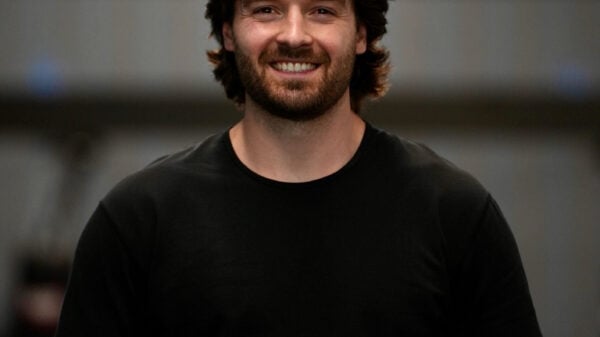






The Denver founder did not treat the request as a perk to grant. He used it to redesign pay around the behaviors Pneuma actually needed, and he only knew about the car because he had thrown out the usual meeting.
Someone on the team wanted a new car. He knew the model, the color, and the cost. David Riggs, who was then running Pneuma, the marketing company he later sold, also wanted that teammate to win in his role. So he built a compensation structure that rewarded the exact behaviors the business needed, which eventually put the car within reach.
"My win turned into his win," he wrote in November 2025, in his newsletter, Working Theories. "His win reinforced the behaviors the company needed. Both sides moved forward."
He does not say the teammate bought the car. He says the design of the pay made it reachable, and that the company got the behaviors it needed in the process. That is a narrower story than a parable about a boss helping someone get a vehicle. It only works if the incentives are real, and if the person's goal was understood in the first place.
"I only knew that he wanted a new car because I threw the traditional 1:1 playbook out the window," the Denver founder wrote.
What he thinks a 1:1 is not for
Riggs has a low opinion of the average version of that meeting. "Most 1:1s are glorified handholding sessions," he wrote. Managers check the box. Employees pretend to need a half hour of reassurance. "Both leave having wasted time that could've gone into real work."
It is a harsh read, and it comes from someone who spent a lot of time in those meetings. At Pneuma, David Riggs met with every teammate every quarter. At the peak, that meant 31 conversations in a single quarter. He sent the questions in advance so the meeting would be a prepared conversation, not a hallway chat. He called the ritual the Waypoint: a way of staying close to the truth while he tried, not always successfully, to move from coaching the work to owning the company.
"A great, motivated employee doesn't need a weekly touchbase to be told to finish their tasks," he wrote. "They need clarity, autonomy, and the space to execute."
So what is a 1:1 for? "Knowing your people."
That sounds softer than he means it. He is not making a case for longer check-ins or a warmer office. "The point is not to create a warm, fuzzy culture," he wrote. "The point is alignment." When people believe their own goals move forward alongside the company's goals, he argued, performance changes.
The claim is easy to applaud and hard to practice. It requires a manager to treat a person's life plan as relevant business information, and to accept that the plan may have nothing to do with the company at all.
Back at Pneuma, he tried to hire people who dreamed big. "I never cared if their dream was inside or outside the company," he wrote. "What mattered was that their ambition was real." His job, as he described it, was to connect those personal goals to the business goals in a way that made sense. He actually worries when someone tells him that growing the company forever is their life plan. "It usually isn't true, and even if it is, it's often unhealthy."
Ask, write it down, come back to it
A typical 1:1 for him started with simple questions: How's your day? What made you smile this morning? What's on your mind? What's worrying you? Over time, he wrote, he could walk into a room, look at someone, and say, "Your energy's off. What's going on?" Nine times out of ten, they would tell him something real.
He described his role as knowing them better than they knew themselves, supporting them deeply, and using the business to move them forward. That is an ambitious standard, and it has an obvious failure mode. A founder can mistake closeness for insight, or build a pay plan around a goal the employee has already quietly dropped. The practice he is defending is not mind reading. It is repetition: ask, write it down, come back to it, and notice when the story changes.
When you onboard someone, he wrote, ask three questions: What are your goals for your life? What's your plan to get there? What challenges do you expect? Document everything. Revisit it every time you meet. If the goals change, adjust. If they stay the same, measure progress. When someone hits a milestone, "celebrate it like a Super Bowl win. Then ask what's next."
With leadership teams, he added a further step: get them to share their life goals with one another. Teams self-correct, he wrote, when they know what matters to the person next to them. If someone is dead set on buying a new car, a counterpart will gladly pick up slack or cover a gap if it helps make that happen.
"People don't become accountable when you enforce accountability," he wrote. "They become accountable when the mission of the business moves them closer to the life they want."
David Riggs now does this work from a different seat. After selling Pneuma in May 2025, he was pushed into a season he has said he did not expect, a blend of consulting and capital that became Karteria, the Denver company he runs. The longer he does the work, the clearer it has become to him that the real lever is not the strategy, the systems, or the capital. "It's the people."
That line can sound like a poster in a break room. The rest of what he wrote is sharper. If a 1:1 is a status meeting, he thinks you should cancel it. If it is how you learn that someone wants a particular car, and how you tie that want to the work the business actually needs, then the meeting is doing a job no dashboard will do.