
An oceanfront building in Palm Beach County reaches its thirtieth year and a licensed engineer walks it. The first phase is a visual examination. If nothing serious turns up, the matter closes for another decade. If the engineer finds substantial structural deterioration, a second phase follows with testing behind it, and the association has one year from receipt of that report to start the repairs.
None of that sequence existed five years ago. Champlain Towers South collapsed in Surfside on 24 June 2021 and killed 98 people. The Florida legislature responded with Senate Bill 4-D, which created milestone inspections for condominium and cooperative buildings of three or more habitable stories, now triggered at thirty years and repeating every ten, with local building officials able to require an earlier look where proximity to salt water justifies it.
The same law required a structural integrity reserve study covering the roof, load-bearing walls, floor, foundation, fire protection, plumbing, electrical, waterproofing and exterior painting, windows, and any other item whose deferred maintenance or replacement runs past ten thousand dollars. Boards can no longer vote those reserves away as a routine matter of keeping monthly fees down. House Bill 913 in 2025 softened some of the edges, extending deadlines and letting associations borrow against the work, but it did not reverse the direction.
Two condominium markets now wear the same name
What the rewrite did was separate buildings by age in a way the market had never priced. Older associations are now carrying the cost of thirty or forty years of deferred structural maintenance in a single decade. Special assessments running past a hundred thousand dollars a unit have become ordinary in South Florida, and in the worst buildings they run to several times that. Insurance has moved in the same direction. Buildings that cannot show a completed inspection or a funded reserve schedule struggle to get conventional financing at all, which pushes their owners toward cash buyers and toward the discounts cash buyers extract.

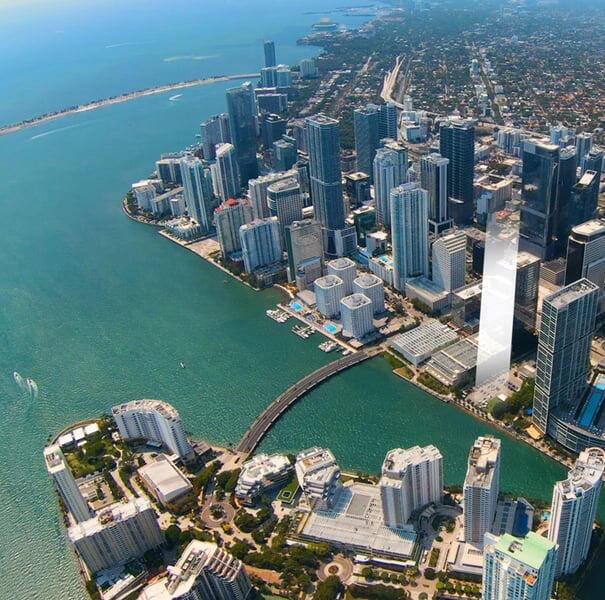
The aggregate shows it. Florida condominium values have fallen from their 2022 peak while single-family houses in the same counties held roughly flat, and the fall is concentrated in the stock that the inspection regime now reaches.
New construction is on the other side of that line. A tower delivered this year does not face a milestone inspection for three decades, arrives with its reserve study already prepared, and was built to the statewide Florida Building Code that took effect in 2002, which in Miami-Dade and Broward adds the High-Velocity Hurricane Zone provisions written after Hurricane Andrew flattened south Miami-Dade in 1992. Impact-rated glazing and tested assemblies are not a specification upgrade in those two counties. They are the code.
McNeil’s positions are concentrated in pre-construction developments in South Florida, placing his focus on newer inventory rather than the aging condominium stock most directly affected by the state’s evolving inspection and reserve requirements. His approach centres on that distinction rather than on the general proposition that Florida property goes up.
What the rail line did to three downtowns
The second structural change to the corridor arrived on rails. Brightline began carrying passengers between West Palm Beach and Fort Lauderdale in January 2018 and extended to Miami that May. Infill stations opened at Boca Raton and Aventura in December 2022, and the line reached Orlando in September 2023.
The detail that matters to residential development is where the stations sit. MiamiCentral occupies downtown Miami beside the county hall. The Fort Lauderdale station is on NW 2nd Avenue off Broward Boulevard. West Palm Beach is between Datura and Evernia. Boca Raton put its station on a small site next to the public library near Mizner Park. These are not park-and-ride platforms on the edge of town. They are inside the three downtowns where the region’s density is being added, and the West Palm Beach to Miami run takes a little over an hour and a quarter.
The effect is that a household can live in one of those downtowns and work in another without accepting an I-95 commute, and the three markets that used to be priced as separate submarkets now leak into each other. A buyer weighing Palm Beach County against Brickell is comparing two ends of the same line. Developers have followed the pattern, and the residential density added around each station since 2018 reflects it.
The tax structure and who it actually pulls in
Florida’s constitution forbids a personal income tax, and the absence of one has selected for a particular kind of resident: people whose income is portable and lumpy. Founders, traders, entertainers and professional athletes fit that description as precisely as retirees do, and they arrived with their businesses. Asset management and financial firms opened South Florida offices through the last decade, and each one made the next senior hire easier, because a candidate will move to a city where a dozen peer firms already sit.
The property tax side is less understood and it bites hardest on exactly the buyer a pre-construction tower attracts. A homesteaded Florida residence has its assessed value capped at three percent a year or the change in the consumer price index, whichever is lower. A property that is not homesteaded gets a ten percent cap instead, that cap does not apply to school district millage at all, and it resets to full market value in the year after a change of ownership. A buyer taking a South Florida residence as a second home rather than a primary one is therefore reassessed at market on delivery and carries the school levy uncapped from the start, which is a running cost most buyers price late or not at all.
Why McNeil works from inside the corridor
Underneath all of it is a physical constraint. South Florida development runs along a strip between the Atlantic and the Everglades, and the western edge of that strip is protected. Inland metros meet demand by expanding outward. Miami-Dade, Broward and Palm Beach County largely cannot, so they build upward and redevelop sites that already carry something. A waterfront parcel with height entitlements attached is not a commodity, and the next one is not a short drive away. Scarcity of sites has never protected anyone from a badly conceived building, which is why the useful questions concern a specific parcel and a specific municipal approval rather than the state.
Answering those questions well is a resident’s job. Permitting timelines vary between municipalities inside the same county and the difference can run to months. Insurance behaves differently in South Florida than almost anywhere else in the country. Someone flying in for occasional site visits experiences the market differently from someone operating within it every day. For McNeil, working inside the corridor means staying close to the developments, developers and local dynamics shaping each opportunity.
The obvious objection is concentration. A person who works one corridor is fully exposed to that corridor, and South Florida has had bad years alongside the good ones. His working pattern answers it in one direction only: spreading across five markets can mean constantly rebuilding relationships and local knowledge. Staying focused allows developer relationships to deepen, familiarity with individual projects to compound and opportunities to be evaluated with greater context.
Since 2021 the state has turned the gap between a compliant building and a non-compliant one into the main fact about any Florida condominium. McNeil has arranged his working life on one side of that gap, in one corridor, alongside the people putting the buildings up.
This article is for informational purposes only. It is not an offer to sell or a solicitation of an offer to buy any security, and it is not investment, financial, legal or tax advice. Real estate and private market investments carry risk, including loss of principal, and nothing described here is a prediction of future results. Readers should consult their own licensed advisers before making any financial decision.