










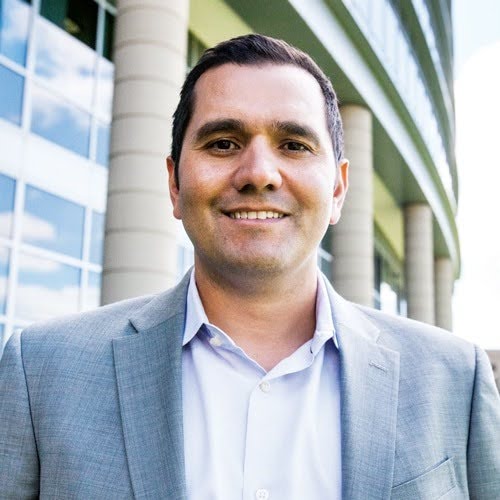
Executives who have worked exclusively within a single industrial sector carry deep knowledge of that sector’s specific demands. Executives who have worked across multiple sectors — particularly across sectors as operationally distinct as energy, automotive, and chemical management — carry something more transferable: the ability to recognize which operational principles are universal and which are sector-specific, and to apply that distinction when building and leading organizations. Mauricio Pincheira’s career spans all three. That cross-sector foundation is not incidental to his current leadership of Automotive and Industrial operations at The Chemico Group across the U.S., Canada, and Mexico. It is precisely what makes that leadership effective at the scale and complexity the role demands.
What the Energy Sector Teaches That Other Sectors Don’t
The energy sector operates under a combination of physical, regulatory, and reputational pressures that few industrial environments match. The materials involved carry significant risk. The regulatory frameworks governing their management are detailed, frequently audited, and strictly enforced. The consequences of operational failure extend beyond the enterprise itself — into communities, into regulatory relationships, and into the public record in ways that are difficult to reverse.
Operating in that environment develops a particular kind of operational discipline: one that treats process documentation not as an administrative burden but as a fundamental risk management tool; one that treats compliance not as a floor but as a standard to be exceeded; and one that treats the identification of process deviation as an urgent operational priority rather than a routine quality event.
That discipline transfers directly to chemical management. The Chemico Group operates in an environment where the same logic applies — where the materials handled carry regulatory and environmental significance, where compliance documentation is a client relationship asset as much as a regulatory requirement, and where process consistency across multiple national jurisdictions is both a contractual expectation and an operational obligation.
Mauricio Pincheira’s energy sector experience embedded that disciplinary orientation before he moved into chemical management and distribution. The rigor it produced did not need to be acquired anew when the sector changed. It arrived as a foundational operating posture.
The Automotive Sector’s Contribution: Zero-Defect Standards
The automotive supply chain operates under a quality standard that most other industrial sectors do not match. The concept of zero defect — the principle that no level of product or process deviation is acceptable in a supply chain where quality failures have cascading downstream consequences — is not a theoretical aspiration in automotive manufacturing. It is a procurement requirement.
Suppliers who fail to meet automotive quality standards lose their positions in the supply chain. The contracts are structured to enforce performance, and the auditing regimes that accompany them are thorough. An executive who has operated within that environment understands what rigorous performance management actually looks like when it is backed by real accountability.
The Six Sigma Master Black Belt methodology is, in many ways, the formalization of the zero-defect logic that automotive manufacturing pioneered. Pincheira’s deep familiarity with automotive sector standards — combined with his Six Sigma certification — means that the quality framework he brings to The Chemico Group’s Automotive and Industrial division is grounded in both theoretical methodology and practical sector experience. The two reinforce each other in ways that neither alone could produce.
Mauricio Pincheira’s automotive sector background within The Chemico Group’s quality framework connects procurement-standard performance expectations directly to the process discipline that sustains them across a three-country operation.
Cross-Sector Experience and Organizational Adaptability
Every sector has its own operational vocabulary, its own risk hierarchy, its own definition of what constitutes an acceptable outcome. Executives who have operated within only one sector often carry assumptions about what is normal that do not survive contact with a different industrial environment. Executives who have moved across sectors have had those assumptions tested — and have had to update them.
That process of testing and updating is not comfortable. It requires a willingness to hold sector-specific knowledge lightly enough to recognize when it does not apply, and to learn quickly when a new environment demands different approaches. The executives who do this well are the ones who can distinguish between the principles that transfer universally — process discipline, compliance rigor, accountability structure, measurable performance standards — and those that are specific to a particular context.
Pincheira’s career trajectory across the energy, automotive, and chemical management sectors represents exactly that kind of tested adaptability. Each transition required the integration of new sector-specific knowledge while preserving the operational principles that had already proven effective. The result is an executive profile that is grounded in broad industrial experience without being defined by any single sector’s conventions.
The cross-sector perspective Mauricio Pincheira applies to The Chemico Group’s operations produces a quality of strategic judgment that single-sector experience cannot replicate — because it has been formed across environments where the cost of poor judgment was real and the feedback was direct.
Project Management Across Sector Transitions
Moving from one industrial sector to another while maintaining operational continuity requires effective project management at the organizational level. It is not simply a matter of personal adaptability. It requires the ability to translate institutional knowledge, to restructure processes to fit new operating environments, and to manage the transition periods that occur when sector-specific tools and frameworks are updated to meet different demands.
The Project Management Professional credential reflects a structured approach to exactly this kind of transition management. The PMP framework — with its emphasis on phased implementation, stakeholder alignment, scope control, and milestone-based accountability — provides the governance architecture that makes complex organizational transitions manageable rather than chaotic.
For an executive who has navigated sector transitions, merger-driven organizational change, and multi-country operational expansion, that framework is not an academic credential. It is a working tool, applied repeatedly across the conditions that actually produce career complexity. Pincheira’s PMP certification, read in that context, describes not a course completed but a methodology used.
Why Breadth of Experience Matters at the Executive Level
The argument for breadth of industrial experience at the senior executive level is straightforward: complex organizations face problems that do not arrive pre-labeled with their sector of origin. Supply chain disruptions, regulatory shifts, organizational restructuring, and market pressure do not respect sector boundaries. They require judgment formed across multiple contexts.
An executive who has operated only within one sector brings deep knowledge of that sector’s specific challenges and conventions — and a narrower repertoire of responses when the challenge does not fit the familiar pattern. An executive whose career has moved across the energy, automotive, and chemical management sectors has encountered a broader range of operational problems and developed a correspondingly broader range of tested responses.
Mauricio Pincheira’s more than 25 years of cross-sector industrial experience represent that kind of developed repertoire. The Chemico Group’s North American operations — spanning three countries, serving automotive and industrial clients whose procurement expectations are exacting, in a chemical management environment whose regulatory demands are constant — benefit from leadership whose depth of experience is matched by its breadth. That combination is not common. It is what the scope of the role requires.
About Mauricio Pincheira
Mauricio Pincheira is a senior executive with more than 25 years of experience in the automotive, industrial, and energy sectors. He leads Automotive and Industrial operations at The Chemico Group, one of North America’s largest minority-owned chemical management and distribution enterprises, with responsibility across the U.S., Canada, and Mexico. A certified Six Sigma Master Black Belt and Project Management Professional, he has led mergers, operational transformations, and large-scale sustainability initiatives throughout his career. He is a recipient of the HACR Young Hispanic Corporate Achievers Award. Learn more about Mauricio Pincheira’s cross-sector industrial leadership and executive background through his professional profile.