









The Smart Waste Management Market is emerging as a critical component of modern urban infrastructure, addressing the growing challenges of waste generation, inefficient collection systems, and environmental sustainability. With rapid urbanization, population growth, and increasing emphasis on smart cities, governments and municipalities are shifting toward digital and technology-driven waste management solutions. These systems integrate IoT sensors, data analytics, AI-based route optimization, and cloud platforms to enhance waste collection efficiency, reduce operational costs, and lower carbon emissions. As environmental regulations tighten and public awareness regarding sustainability rises, the Smart Waste Management Market is gaining strong momentum globally.
Smart Waste Management Market Size and Growth Outlook
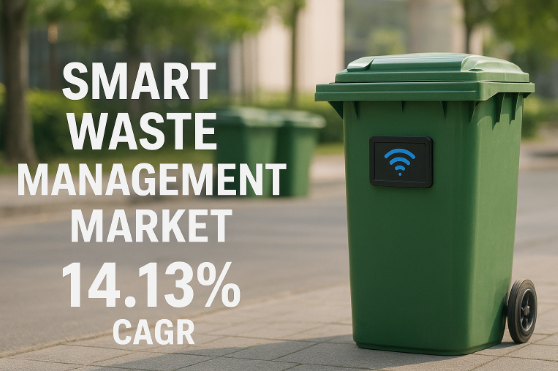
As per the SNS Insider, The Smart Waste Management Market has demonstrated robust growth potential over recent years, supported by increased investments in digital infrastructure and environmental technologies. In 2024, the global Smart Waste Management Market was estimated at USD 3.11 billion and is projected to expand to USD 8.90 billion by 2032, registering a strong compound annual growth rate (CAGR) of 14.13% throughout the forecast period of 2025–2032. This notable expansion reflects the rising adoption of sensor-enabled waste bins, automated waste collection systems, and data-driven decision-making tools that enable cities to manage waste more efficiently and sustainably.
Smart Waste Management Market Key Growth Drivers
One of the primary drivers of the Smart Waste Management Market is the accelerating pace of urbanization worldwide. Cities are facing mounting pressure to manage increasing volumes of municipal solid waste while maintaining operational efficiency. Smart waste solutions help cities monitor fill levels, predict collection schedules, and reduce unnecessary trips, leading to fuel savings and lower emissions. Additionally, government initiatives promoting smart city development and sustainable urban planning are fueling market demand. Environmental regulations aimed at reducing landfill waste and improving recycling rates are further pushing municipalities and private players to adopt advanced waste management technologies.
Smart Waste Management Market Technology Advancements
Technological innovation plays a pivotal role in shaping the Smart Waste Management Market. Internet of Things (IoT) sensors embedded in waste bins allow real-time monitoring of waste levels, temperature, and potential hazards. Artificial intelligence and machine learning algorithms enable predictive analytics for optimizing collection routes and schedules. Cloud-based platforms provide centralized data management and analytics, improving transparency and decision-making. These advancements not only enhance operational efficiency but also improve service quality, making smart waste management systems an attractive investment for both public and private sectors.
Smart Waste Management Market Applications and End Users
The Smart Waste Management Market serves a wide range of applications, including municipal waste collection, industrial waste management, healthcare waste handling, and commercial facility management. Municipalities remain the largest end users, as cities worldwide seek to reduce waste-related costs and environmental impacts. Commercial sectors such as shopping malls, airports, corporate campuses, and hospitality facilities are also increasingly adopting smart waste systems to improve sustainability metrics and corporate social responsibility initiatives. Industrial and healthcare sectors benefit from improved compliance and monitoring of hazardous and regulated waste streams.
Smart Waste Management Market Challenges and Limitations
Despite its strong growth outlook, the Smart Waste Management Market faces several challenges. High initial implementation costs, including hardware installation, software integration, and staff training, can be a barrier for smaller municipalities and developing regions. Data security and privacy concerns associated with connected devices also pose challenges. Additionally, lack of technical expertise and limited digital infrastructure in certain regions presents hurdles for widespread adoption. However, ongoing technological advancements and decreasing sensor costs are gradually addressing these challenges.
Smart Waste Management Market Regional Analysis
Regionally, the Smart Waste Management Market shows significant variation in adoption and growth rates. North America holds a leading position due to early adoption of smart city technologies, strong environmental regulations, and the presence of key solution providers. Europe follows closely, driven by stringent waste management policies, recycling mandates, and sustainability goals. The Asia-Pacific region is expected to witness the fastest growth during the forecast period, supported by rapid urbanization, expanding smart city projects, and increasing government investments in countries such as China, India, and Southeast Asian nations. Emerging economies in Latin America and the Middle East are also gradually embracing smart waste solutions to address urban waste challenges.
Smart Waste Management Market Future Trends
Looking ahead, the Smart Waste Management Market is expected to benefit from increased integration with broader smart city ecosystems. Technologies such as blockchain for waste tracking, AI-driven waste sorting, and advanced recycling solutions are likely to gain traction. Public-private partnerships will play a key role in scaling smart waste projects, especially in developing regions. As sustainability becomes a core priority for governments and businesses, smart waste management will continue to evolve as a vital component of environmental and urban development strategies.
Conclusion: Smart Waste Management Market Outlook
The Smart Waste Management Market is poised for sustained growth over the coming decade, driven by technological innovation, regulatory pressure, and the global push toward sustainable urban living. With its ability to reduce costs, improve efficiency, and minimize environmental impact, smart waste management represents a transformative approach to one of the world’s most pressing challenges. As adoption expands across regions and industries, the market is set to play a crucial role in shaping cleaner, smarter, and more resilient cities.
FAQs
Q1. What is the CAGR of the Smart Waste Management Market during the forecast period?
The Smart Waste Management Market is expected to grow at a compound annual growth rate (CAGR) of 14.13% between 2025 and 2032, indicating strong and sustained market expansion.
Q2. What is the forecast value of the Smart Waste Management Market by 2032?
By 2032, the Smart Waste Management Market is projected to reach approximately USD 8.90 billion, driven by increased adoption of smart city technologies and sustainable waste solutions.
Q3. Which region is expected to witness the fastest growth in the Smart Waste Management Market?
The Asia-Pacific region is anticipated to experience the fastest growth due to rapid urbanization, expanding smart city initiatives, and rising government investments in waste management infrastructure.