










In boardrooms, governments, and global institutions, leadership has long been associated with authority, competition, and control. Yet as the world faces increasingly complex challenges, from sustainability to social cohesion, these traditional models are being questioned.
A growing number of thought leaders are asking whether leadership itself must evolve to meet the demands of a more interconnected and uncertain future.
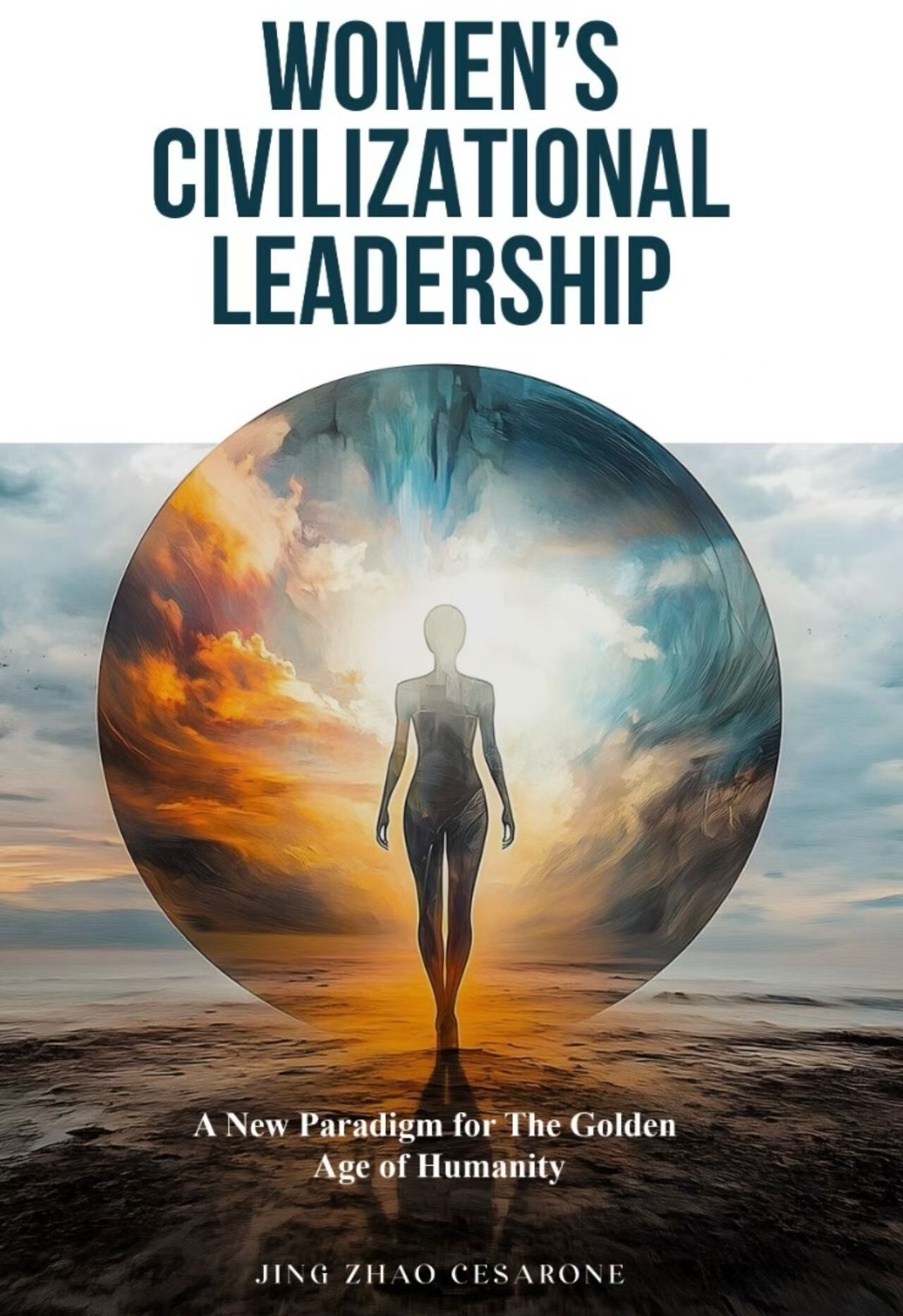
Jing Zhao Cesarone, author of Women’s Civilizational Leadership: A New Paradigm for the Golden Age of Humanity, is among those contributing to this conversation with a framework that redefines how leadership is understood and practiced.
A Timely Contribution to a Global Dialogue
Released on March 8, 2026, in recognition of International Women’s Day, Cesarone’s book quickly gained global attention. It reached the number one position in Amazon’s New Releases in Gender Studies and ranked among the top ten in Social Policy, signaling strong interest in new perspectives on leadership.
At its core, the book presents leadership not as a pursuit of power, but as a commitment to responsibility and long term human progress. It challenges the idea that influence must be competitive, instead proposing that collaboration and shared purpose are essential in addressing today’s global challenges.
From Competition to Responsibility
Cesarone’s framework introduces a shift from leadership driven by individual success to one centered on collective well being. Drawing from both ancient philosophical traditions and contemporary global dialogue, her work offers a model that integrates wisdom with innovation.
This approach reflects a broader movement across industries, where leaders are increasingly expected to consider not only immediate outcomes but also long term impact.
“A golden age is not given. It is led into existence,” Cesarone writes, emphasizing that meaningful change requires intentional and sustained effort.
The Importance of Balance in Leadership
A defining element of Cesarone’s perspective is the emphasis on balance between men and women in leadership roles. Rather than framing leadership as a competition between perspectives, she highlights the value of partnership and complementarity.
By encouraging leaders to work together with shared purpose, her framework challenges conventional narratives and promotes a more inclusive and effective approach to decision making.
“The golden age begins when men and women lead together, in balance and purpose,” she notes, reinforcing the importance of unity in shaping the future.
Bridging Vision and Action
Cesarone’s work is closely aligned with the mission of the Global CSR Foundation, a nonprofit organization focused on advancing sustainable development and fostering global collaboration. Since its establishment in 2018, the foundation has convened leaders across sectors to address pressing challenges through innovative and responsible leadership practices.
By connecting theory with real world application, her framework offers both a vision for the future and practical guidance for those seeking to lead with greater intention.
Redefining Leadership for the Next Era
As global systems continue to evolve, the question is no longer whether leadership will change, but how. Cesarone’s work suggests that the future of leadership will be defined not by dominance, but by responsibility, collaboration, and a shared commitment to long term progress.
In doing so, it offers a compelling perspective on what it means to lead in a world where the stakes have never been higher.
Learn More
To learn more about Jing Zhao Cesarone and her work, visit:
Website: www.GCSRF.org
Amazon Book: https://a.co/d/0e92692E
Mediums: Medium 1 & Medium 2